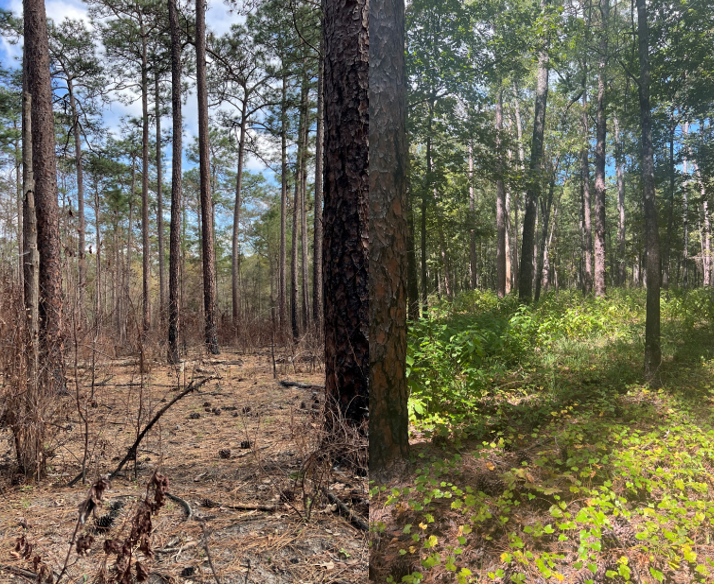
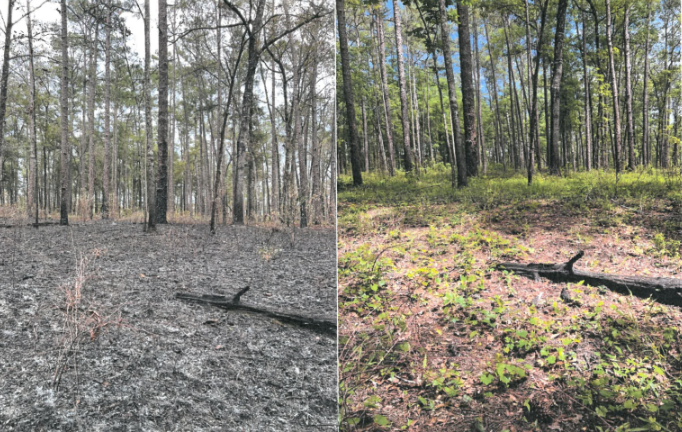
Monitoring Change on Private Lands
The Southwest Georgia Prescribed Burn Association (SWGA PBA) is starting a photo point monitoring program for its members. The purpose of this program is to use photos to track changes across landscapes over time. As part of our free site visits for landowners, we can help set up these points to help track changes your efforts make over time.
Establishing Photo Points to Track Management Efficacy
Georgia DNR’s Brain Romm is an expert in photo point creation.
His biggest note:
“What story are you trying to tell?”
Big changes in habitat structure, new management inputs (ex. mechanical clearing of dense midstory, timber thinning), where the expected before/after is going to be noticeably different.
You may remember how your timber stands look but others managing your property into the future may like to have some good photos as a metric management.
Photo point FAQ:
• Great for restoration phase (big management inputs, “reset” habitat) vs management phase (regular burning). Easy to track with landscape-scale photos and subtle changes in plant community composition.
• For management units where the overall habitat structure is good but want to monitor changes in the plant community with continued management over time.
• Early successional/pioneer species (dogfennel, broomsedge, etc.) transitioning to longer lived perennials (wiregrass, Indiangrass, blazing stars, milkweeds).
• Likely requires more “up close” photos; can be difficult to detect subtle changes in plant community with landscape-scale photos.
• Growing season vs dormant season fire, different herbicide treatments, etc.
Consistency in photos:
• Use a physical point (rebar, t-post, etc.) – something that won’t melt/burn.
- Ensures taking a photo of the same frame each time.
- Utilize dry erase board (or chalk board, notecard, etc.) to be included in photos with additional information like date of photo, management unit identifier, time since last burn/additional management.
- Take photos from multiple directions – cardinal directions are easy to replicate (The PBA likes to use NEWS: North, East, West, South).
- Photos during growing/flowering season for plants will likely be more informative than dormant season photos but both are ok.